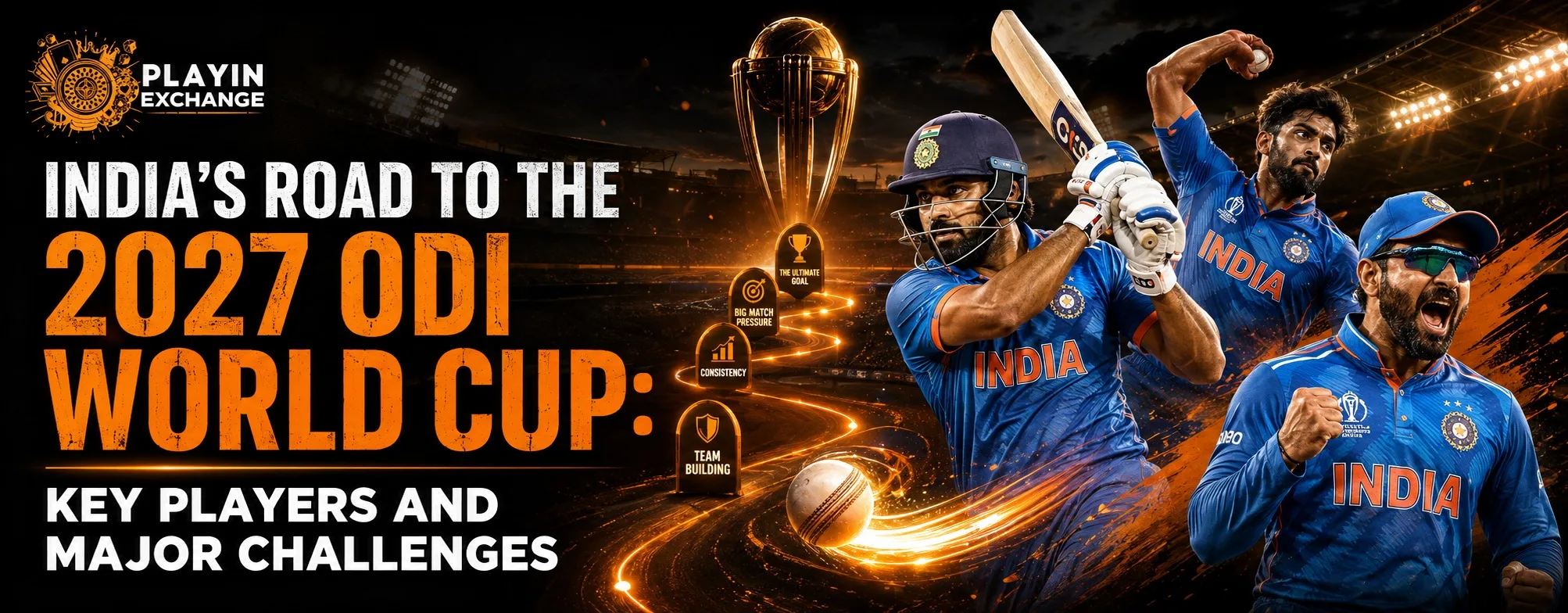
As India begins its journey toward the 2027 ODI World Cup, the conversation is no longer only about talent. It is about building the right combination, managing transitions, and preparing for conditions that will be very different from those in India. For cricket fans following every series and squad announcement on platforms such as Playmatches, the road to the next World Cup already feels like one of the most important phases in Indian cricket.
The tournament will be hosted in South Africa, Zimbabwe, and Namibia. That means pace-friendly pitches, larger grounds, and a greater emphasis on adaptability. India has the talent to challenge for the title, but success will depend on how well the team handles change over the next 18 months.
Why the 2027 World Cup matters so much
India remains one of the strongest ODI teams in the world, yet the disappointment of falling short in major knockout matches still lingers. The 2027 campaign is not just another tournament. It is an opportunity to create a side that can perform consistently across different conditions.
This period is also about long-term value. A successful World Cup team is not built during the tournament itself. It is built through careful selection, role clarity, and trust in players over several bilateral series.
For fans, this process offers a better viewing experience because every match becomes part of a larger story rather than an isolated result.
The key players who can shape India’s campaign
Shubman Gill
Gill is expected to become the batting pillar of the next ODI cycle. His ability to score quickly without taking excessive risks gives India both quality and comfort at the top of the order. He has shown maturity beyond his years and looks capable of handling pressure situations.
Virat Kohli
Even as the team evolves, Kohli’s experience remains invaluable. He brings stability, chase mastery, and a strong understanding of ODI tempo. His presence can make the transition easier for younger players.
Hardik Pandya
A fit Hardik changes the balance of the side. He offers flexibility, leadership, and the rare advantage of a genuine seam bowling all-rounder. His role improves ease of use for the captain because it allows more freedom in team selection.
Jasprit Bumrah
Bumrah remains India’s biggest match winner with the ball. In South African conditions, his accuracy and control at the death could be decisive.
Kuldeep Yadav
Kuldeep’s resurgence has added a wicket-taking dimension in the middle overs. On larger grounds, his variations can become even more effective.
Read more : How Playmatches Makes Online Cricket Betting Simple for Indian Users
The middle-order question
India’s biggest challenge may not be the top order. It is the middle order.
Players such as KL Rahul, Shreyas Iyer, Rishabh Pant, and emerging options like Tilak Varma or Riyan Parag are competing for limited spots. The team must identify players who can handle both quality pace and spin.
This is where customer expectations and cricket expectations are surprisingly similar. Fans today want clarity, consistency, and a defined role for every player. Frequent chopping and changing may create uncertainty and reduce confidence within the squad.
Building a reliable pace attack
Fast bowling depth will be critical. Alongside Bumrah, India need at least two consistently fit and effective pacers.
Arshdeep Singh has improved in white-ball cricket, Mohammed Siraj remains a strong option with the new ball, and younger bowlers will need opportunities. Quality matters more than quantity here. India do not need six rotating fast bowlers. They need three or four trusted performers who can deliver in pressure games.
A reliable attack also improves the overall customer experience for fans because it creates confidence that the team can defend totals, not just chase them.
Adapting to modern ODI cricket
ODI cricket has changed significantly. Teams now attack earlier, use data more effectively, and expect batting depth until number eight.
During this transition, many fans follow analysis, score updates, and match discussions through digital platforms, including the playinmatch app, which has become part of the broader online cricket experience for many users.
India must continue evolving in three areas:
-
More intent in the first 10 overs
-
Better boundary-hitting in overs 35 to 50
-
Greater flexibility in batting positions
Versatility will be one of the team’s biggest strengths if managed correctly.
Managing workload and making thoughtful decisions
One often overlooked aspect is player management. With packed international schedules and franchise cricket commitments, workload decisions become essential.
Thoughtful decision-making is similar to sustainability in other industries. Protecting key players from burnout is a long-term investment. Resting players strategically may sometimes be more valuable than playing every series.
India must especially manage Bumrah, Hardik, and other multi-format players carefully.
The role of leadership and team culture
Whether Rohit Sharma leads through 2027 or a transition occurs, the team culture must remain strong. Successful World Cup sides usually have clear communication, defined expectations, and trust between senior and younger players.
This creates comfort within the squad and allows players to perform naturally rather than fear failure.
Conclusion
India’s road to the 2027 ODI World Cup is filled with both opportunity and pressure. The talent pool is exceptional, but the real challenge lies in building a balanced, adaptable, and mentally strong team.
If India can combine the experience of Kohli and Bumrah with the energy of Gill, Hardik, and the next generation, the team will enter the tournament as a genuine contender. Consistency, role clarity, workload management, and adaptability will matter far more than short-term experimentation.
For cricket fans following every step of this journey, the excitement is only beginning. As we continue tracking India’s progress, squad developments, and major ODI moments, Playmatches remains part of the conversation for passionate followers of the game, and many readers will continue engaging with the platform through playinmatch signup as the countdown to the 2027 World Cup gathers momentum.