Introduction
The growth of online gaming has made it easier for users to access sports and gaming platforms from their phones. At the same time, questions about legality, account security, payments, and consumer protection have become increasingly important. People searching for playinmatch login may be interested in accessing an account, but understanding the legal position should come before considering any real-money activity.
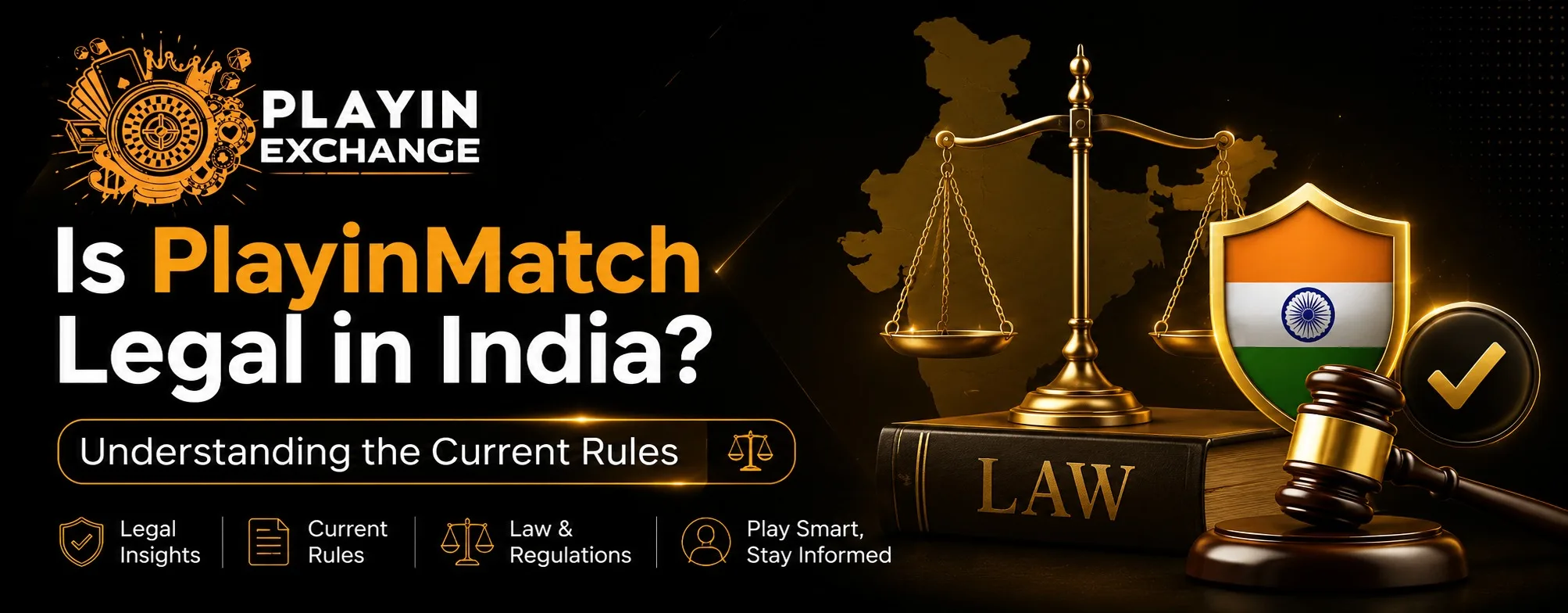
India’s online gaming framework has changed considerably. The Promotion and Regulation of Online Gaming Act, 2025 prohibits online money games, including games involving chance, skill, or a combination of both. The government has also introduced rules that provide a framework for classifying online games and protecting users.
So, rather than assuming that a platform is legal because its website is accessible, users should look at what services it offers and whether those services fall within India’s current rules.
What Has Changed in India’s Online Gaming Laws?
For many years, discussions around online gaming in India often focused on the difference between games of skill and games of chance. That distinction has become less useful when assessing online money games under the current national framework.
The Promotion and Regulation of Online Gaming Act, 2025 takes a broader approach. It prohibits online money games regardless of whether the underlying activity involves skill, chance, or both. The law also restricts advertising, promotion, facilitation, and financial transactions connected with prohibited online money games.
The accompanying 2026 Rules came into force on May 1, 2026. They establish procedures for determining whether an online game is a prohibited money game or falls within permissible categories such as e-sports or online social games.
This change is important for anyone evaluating an online gaming website today.
What Does This Mean for PlayinMatch?
PlayinMatch is presented online as a platform associated with sports betting and gaming. However, the key legal question is not simply whether the website exists or whether users can create accounts. The important question is whether the specific services being offered involve prohibited online money gaming.
If a platform enables users to stake or deposit money for the opportunity to win money or other financial rewards through an online game, that activity may fall within the definition of an online money game under the current framework.
Therefore, users should not interpret the availability of a PlayinMatch website, registration page, or login facility as evidence that its real-money services are legally authorised in India.
It is also important not to make unsupported claims about a platform’s licensing status. Before using any real-money service, users should look for verifiable information about the operator, applicable authorisations, terms, grievance mechanisms, and the legal jurisdiction under which the service operates.
Why Transparency Matters to Users
Legal compliance and transparency are closely connected to the overall customer experience. A platform can be easy to navigate and still leave users with important unanswered questions about payments, account restrictions, data handling, or dispute resolution.
A quality online service should make its terms understandable and provide clear information about account requirements and user responsibilities. Customers also benefit from straightforward support channels and accessible policies.
Ease of use should never be the only measure of a platform’s value. A polished interface may provide comfort during everyday browsing, but long-term confidence depends on transparency and accountability.
For users, this means checking the legal information before focusing on convenience, bonuses, markets, or other features.
What Should Users Check Before Creating an Account?
Anyone considering an online gaming platform can follow a simple verification process.
1. Check the operator
Look for the legal name of the company or entity operating the service. A platform should provide enough information for users to understand who is responsible for the service.
2. Understand the game type
Determine whether the service involves money being deposited or staked with the possibility of receiving financial winnings. This distinction is particularly important under India’s current law.
3. Read the terms
Terms and conditions should explain account restrictions, payments, withdrawals, verification requirements, and dispute procedures in understandable language.
4. Review privacy and security information
Customers increasingly expect platforms to explain how personal and financial information is collected, stored, and protected. The 2026 Rules also introduce user-safety and transparency requirements within the regulatory framework.
5. Avoid relying on APKs or unofficial links
An unofficial download link does not establish legitimacy. Users should be particularly cautious when an application is distributed through unknown websites, messaging groups, or other unverified channels.
Customer Experience and Long-Term Value
Changing customer expectations have made trust an important part of online services. Users increasingly want more than quick access. They expect clear policies, secure handling of information, responsive support, and predictable account procedures.
That is why legal verification has long-term value. Spending a few minutes checking a platform’s status can be more useful than making a decision based solely on design or promotional claims.
Thoughtful digital decision-making also supports sustainability in the broader sense. A healthier online gaming environment depends on responsible operators, informed users, transparent practices, and systems that discourage harmful financial behaviour. India’s new framework specifically aims to protect users while supporting legitimate e-sports and social gaming.
Is PlayinMatch Safe and Legal for Indian Users?
There is an important distinction between accessibility, safety, and legality.
A website being accessible from India does not automatically mean its real-money services are authorised under Indian law. Likewise, the presence of login facilities, customer support, payment options, or account verification does not by itself establish regulatory approval.
Under the current national framework, online money games are prohibited. Therefore, Indian users should exercise considerable caution with any platform offering real-money online gaming and should verify its current legal status rather than relying on older information about skill-based gaming or state-level rules.
Conclusion
The legal environment for online gaming in India has changed significantly, and users should evaluate platforms according to the current national framework rather than older assumptions about skill and chance. The Promotion and Regulation of Online Gaming Act, 2025 prohibits online money games and the 2026 Rules provide a structured system for classifying online games and protecting users.
For anyone researching playinmatch app, accessing an account should not be the only consideration. Before using PlayinMatch or any similar service, check the nature of its games, operator information, applicable authorisations, payment practices, privacy terms, and current Indian regulations. A careful approach can help users make more informed decisions while the PlayinMatch brand and the wider gaming industry adapt to India’s changing regulatory expectations.
FAQs
1. Is PlayinMatch legal in India?
The legality depends on the specific services being offered. India’s current framework prohibits online money games, so users should not assume that a real-money betting or gaming service is legally authorised simply because it is accessible online.
2. Does having a PlayinMatch account mean it is legally approved?
No. Account registration or a functioning login system does not establish regulatory approval. Users should independently verify the platform’s legal and regulatory status.
3. Are skill-based online money games still treated differently?
Under the current national framework, the prohibition on online money games applies to games based on chance, skill, or a combination of both.
4. When did the new online gaming rules take effect?
The Promotion and Regulation of Online Gaming Rules, 2026 came into force on May 1, 2026.
5. What should I check before using an online gaming platform?
Check the operator’s identity, game type, legal status, terms and conditions, privacy practices, payment procedures, customer support, and applicable Indian regulations before depositing money or sharing sensitive information.