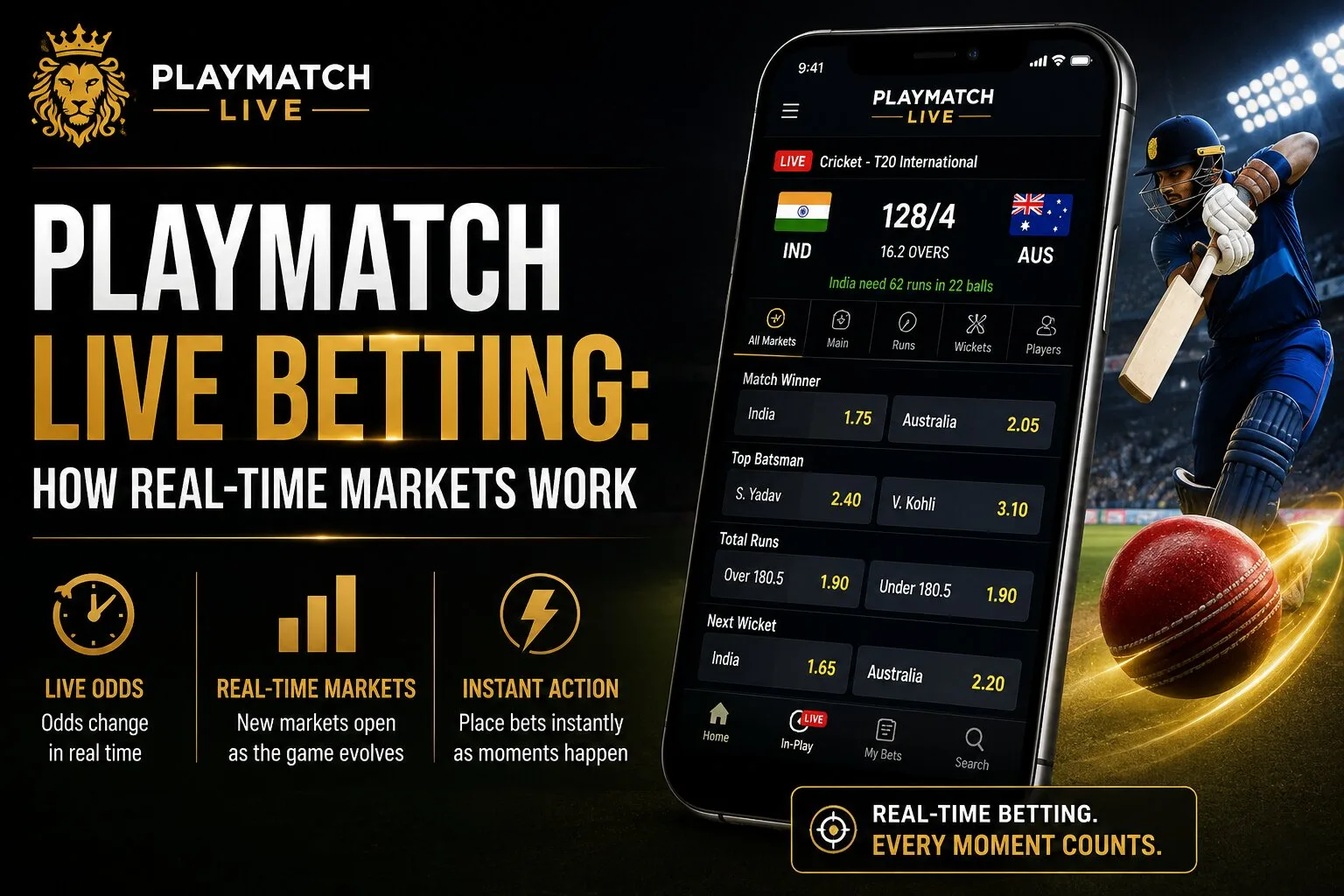
Live betting has changed the way sports fans follow matches. Instead of making a decision before the first ball, goal, point, or over, live markets allow users to assess what is happening and see how available prices change during the event. This makes the experience more interactive, but it also requires greater attention because markets can move quickly. Playmatch live betting can be understood more easily when users know what causes these movements, how markets are updated, and what to check before making a decision.
What Is Live Betting?
Live betting, also called in-play betting, takes place after a sporting event has started. Unlike pre-match markets, where odds are generally available before the event begins, live markets respond to developments during the game.
For example, in cricket, a wicket, boundary, change in required run rate, or strong batting partnership can alter the perceived chances of each side. In football, a goal, red card, penalty, or change in momentum can have a similar effect.
The important point is that live odds are not fixed. They can change several times during a match, and some markets may temporarily close when a significant event is taking place.
How Real-Time Markets Work
Live markets depend on continuously updated information. The system considers the current state of an event and adjusts available prices accordingly.
Several factors can influence the market:
- Current score or result
- Time remaining
- Player or team performance
- Recent match events
- Injuries, substitutions, or dismissals
- Required scoring rate
- Match statistics and other available data
When something important happens, a market may be suspended briefly. This gives the operator time to process the new information and recalculate prices. Once the market is reopened, the available options may look different from those shown moments earlier.
This is why the price displayed when a user selects a market may sometimes change before the bet is accepted.
Why Timing Matters in Live Markets
Timing is one of the biggest differences between pre-match and live betting. A decision made before an event may remain relevant for several hours, while a live market can change within seconds.
Consider a T20 cricket match where a chasing team needs 50 runs from the final five overs. If a batter hits two boundaries, the required rate changes and market expectations may move. A wicket on the next delivery can produce another significant shift.
This does not mean that every movement creates a good opportunity. A changing price simply reflects new information and market expectations. Users should avoid assuming that a sudden movement automatically represents value.
Quality and Accuracy of Live Information
The quality of a live betting experience depends heavily on how clearly information is presented. Score updates, market status, prices, event statistics, and suspension notices should be easy to understand.
A good interface reduces unnecessary confusion. Users should be able to identify the event, market type, current price, and relevant terms without searching through multiple screens.
We focus on making information easier to follow because clarity matters when customers are viewing a fast-moving event. Clear layouts and readable market information can make the overall experience more comfortable, particularly on smaller mobile screens.
Ease of Use Across Different Sports
One advantage of live markets is their versatility. They are not limited to one type of sporting event. Depending on availability, users may find markets connected with cricket, football, tennis, basketball, and other sports.
Each sport behaves differently. Cricket has frequent changes after individual deliveries, while tennis can shift after a break of serve. Football markets can react sharply to goals and disciplinary decisions.
Understanding the sport before using a live market is therefore important. A user who knows the rules and follows the match closely is generally better positioned to understand why a market has changed.
Customer Experience and Mobile Access
Modern customers increasingly expect online platforms to work smoothly on phones and tablets. Live betting makes this expectation even more important because users may follow a match while away from a desktop computer.
A useful mobile experience should provide straightforward navigation, readable market information, and quick access to the event being followed. However, speed should not come at the expense of clarity.
Playmatch can be viewed in this context as part of the broader shift toward mobile-first sports experiences, where customers expect convenient access and information that is easy to understand while watching a live event.
Making Thoughtful Decisions
Live markets can encourage quick decisions because prices are constantly moving. That makes personal discipline especially important.
Users should decide how much they are comfortable spending before starting and avoid increasing that amount simply because a match is moving in an unexpected direction. It is also sensible to understand the rules of each market before placing a wager.
Responsible participation means treating betting as entertainment rather than as a dependable source of income. Taking breaks and avoiding decisions based on frustration or excitement can also support healthier habits.
Long-Term Value and Changing Expectations
Customer expectations continue to change as digital sports platforms become more interactive. People increasingly want live statistics, clear market information, mobile compatibility, and simple navigation rather than a complicated betting interface.
Long-term value comes from providing a consistent experience instead of relying only on short-term promotions. Reliable information, transparent market rules, responsive support, and a straightforward interface can make a platform more useful over time.
Thoughtful design also has a sustainability angle. Efficient interfaces that avoid unnecessary steps, reduce clutter, and work well across existing devices can create a more practical digital experience. The focus should be on useful features rather than adding functions simply because they are available.
Conclusion
Live betting works by connecting changing sports events with changing market information. Understanding how prices react, why markets pause, and why timing matters can help users approach the experience with clearer expectations. For customers exploring Playmatches, the most important consideration should be a combination of usability, transparent information, responsible decision-making, and a comfortable mobile experience. A thoughtful approach can make live sports more engaging without losing sight of the risks involved.
FAQs
What is live betting?
Live betting is wagering on a sporting event after it has already started. The available markets and prices can change as the event develops.
Why do live betting odds change?
Odds can change because of scores, wickets, goals, player performance, time remaining, injuries, and other developments that affect the expected outcome.
Why are some live markets temporarily suspended?
Markets may be suspended when an important event occurs. This allows updated information to be processed before the market is reopened with revised prices.
Can the displayed live price change before a bet is accepted?
Yes. Because live markets move quickly, the price shown when a selection is made may change before the transaction is confirmed.